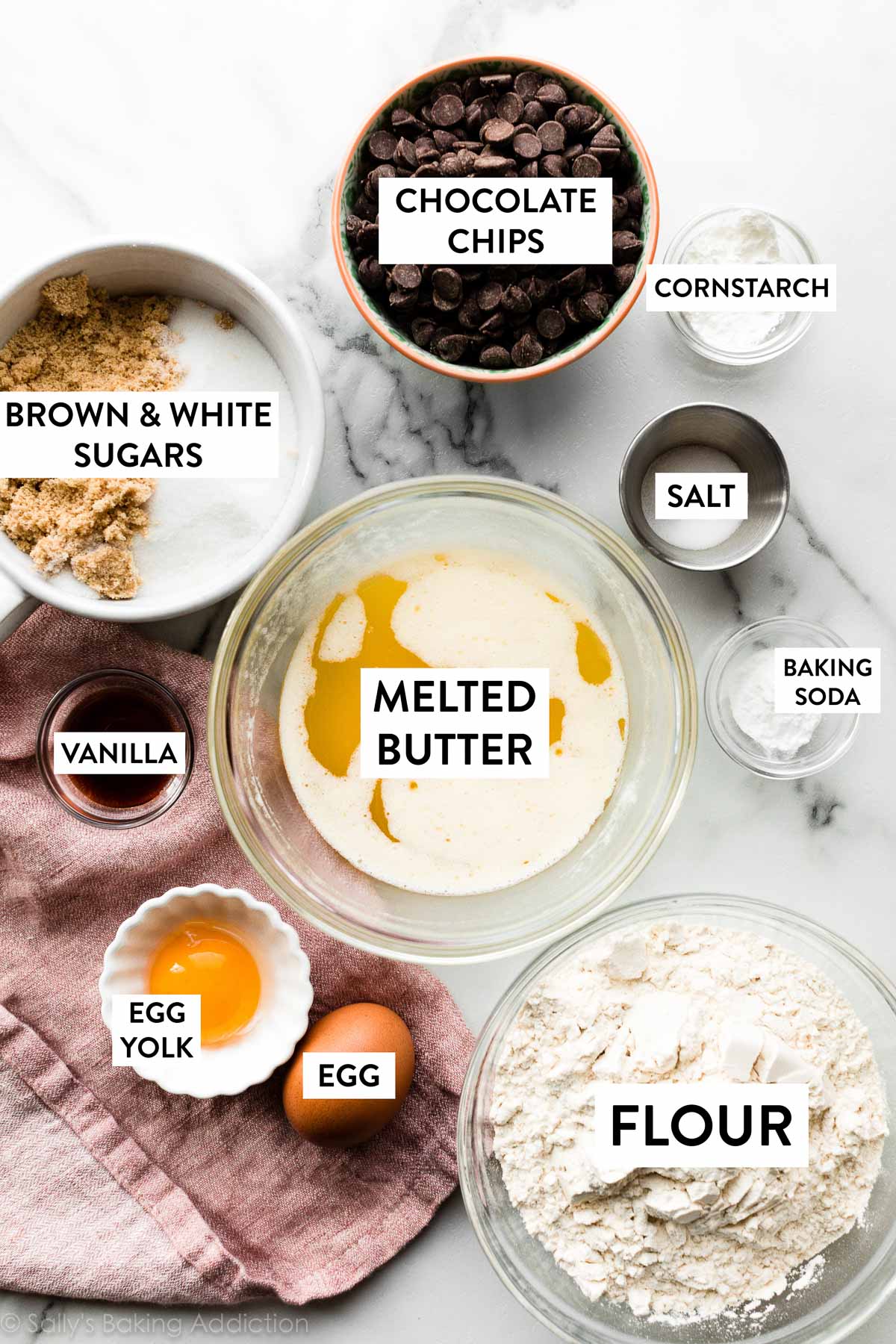
The cookie dough is made from your standard cookie ingredients: flour, leavener, salt, sugar, butter, egg, and vanilla. It’s the ratios and temperature of those ingredients that make this recipe stand out from the rest.
Melted butter: Melted butter produces the chewiest cookies. It can, however, make your baked cookies greasy, so I made sure there is enough flour to counteract that. And using melted butter is also the reason you don’t need a mixer to make these cookies, just like these pumpkin chocolate chip cookies, pumpkin crumb cake cookies, and M&M cookie bars.
More brown sugar than white sugar: More brown sugar than white sugar: The moisture in brown sugar promises an extra soft and chewy baked cookie. White granulated sugar is still necessary, though. It’s dry and helps the cookies spread. A little bit of spread is a good thing.
Cornstarch: Why?Cornstarch gives the cookies that ultra soft consistency we all love. Plus, it helps keep the cookies beautifully thick. We use the same trick when making shortbread cookies.
Egg yolk: Another way to promise a super chewy chocolate chip cookie is to use an extra egg yolk. The extra egg yolk adds richness, soft tenderness, and binds the dough. You will need 1 egg + 1 egg yolk, at room temperature, just like in these brown butter marshmallow crispy cookies. See the recipe Notes for how to bring your eggs to room temperature quickly.
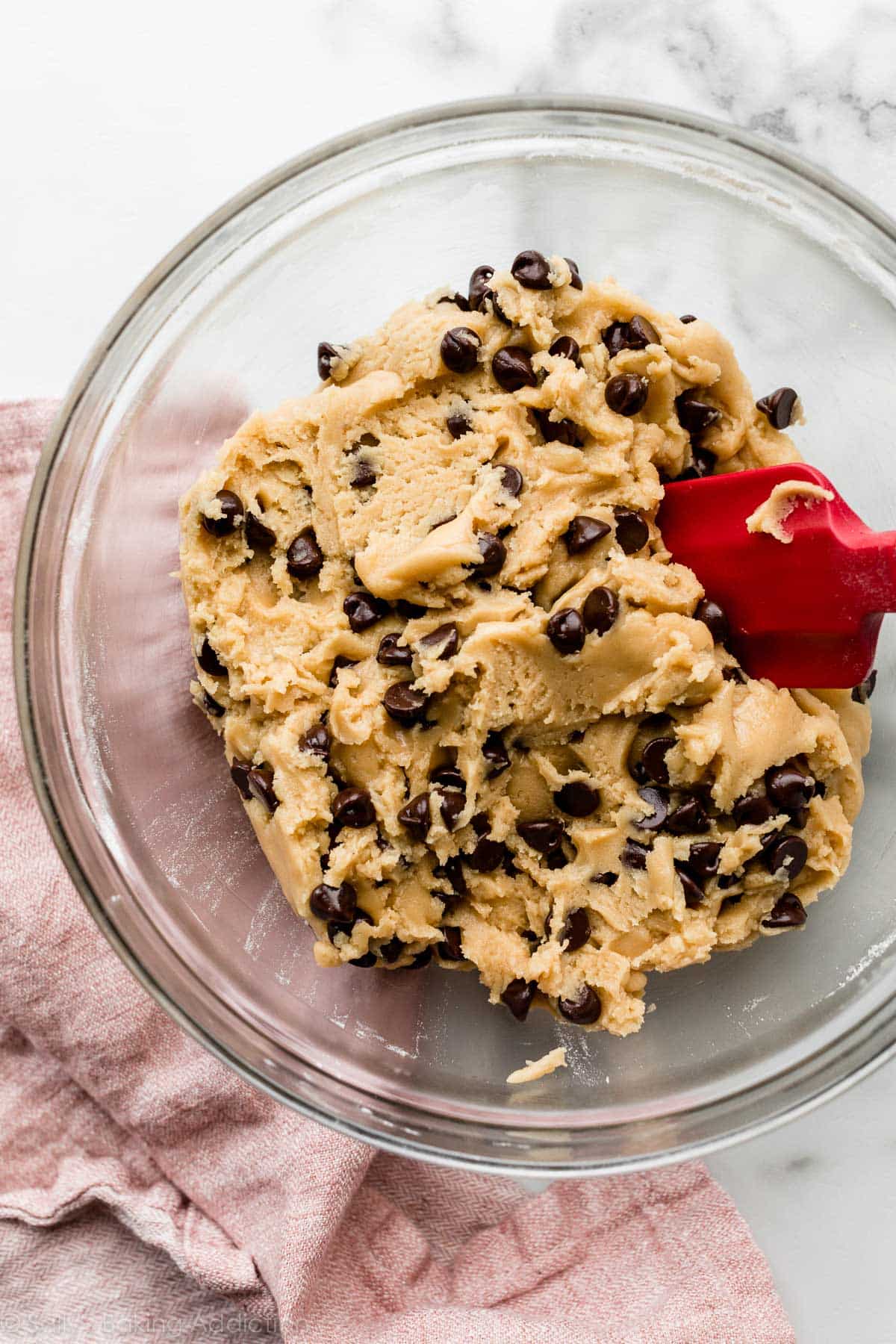
The dough will be soft and the chocolate chips may not stick because of the melted butter. Just keep stirring it; I promise it will come together. Because of the melted butter and extra egg yolk, the slick dough doesn’t even look like normal cookie dough! Trust the process…
l
The most important step is next.
2 Major Success Tips
1. Chill the dough. Chilling the cookie dough is so important in this recipe! Unless you want the cookies to spread into a massive cookie puddle, chilling the dough is mandatory here. It allows the ingredients to settle together after the mixing stage but most importantly: cold dough results in thicker cookies. Cover the cookie dough and chill for at least 2–3 hours or up to 3 days. I usually chill it overnight.
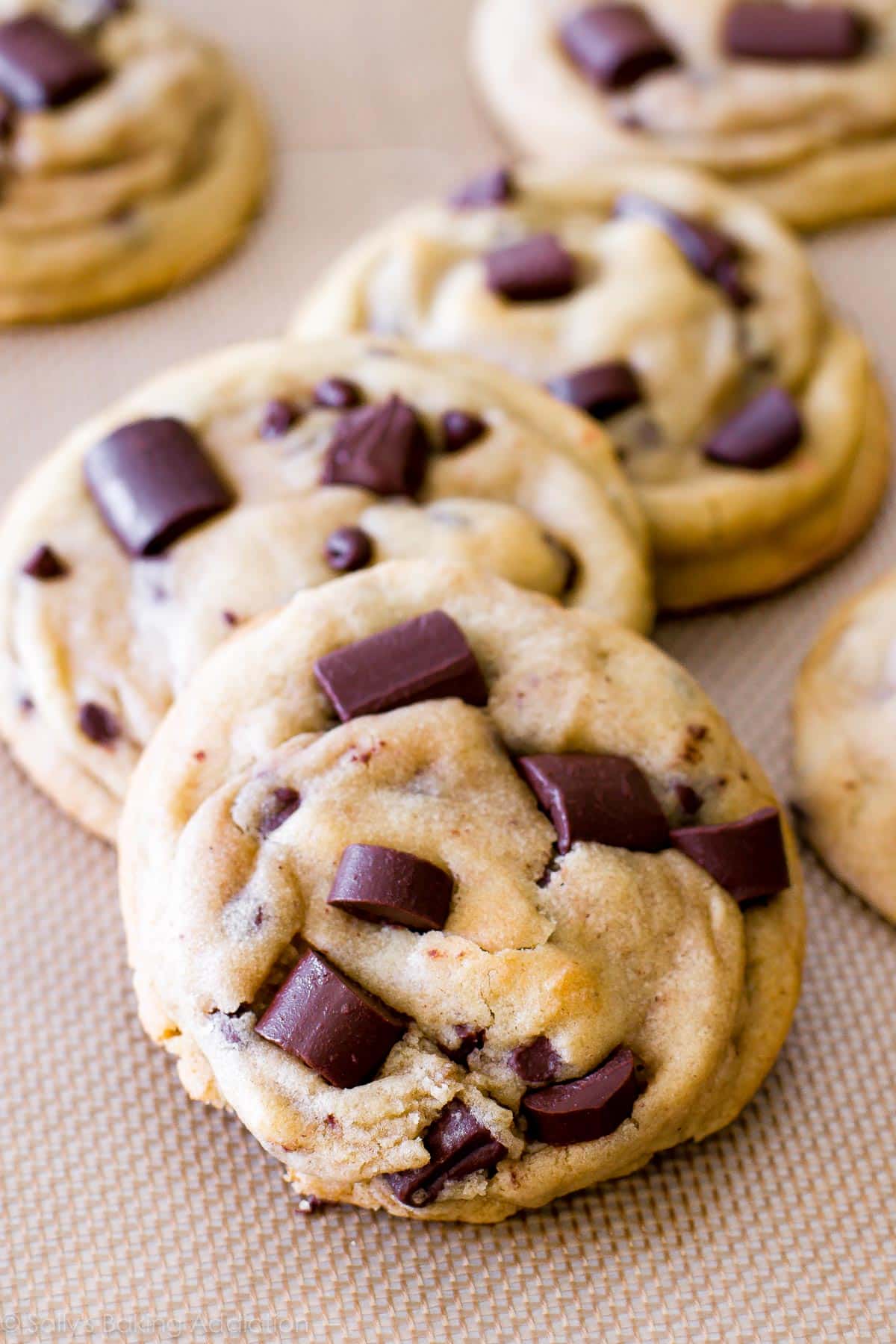
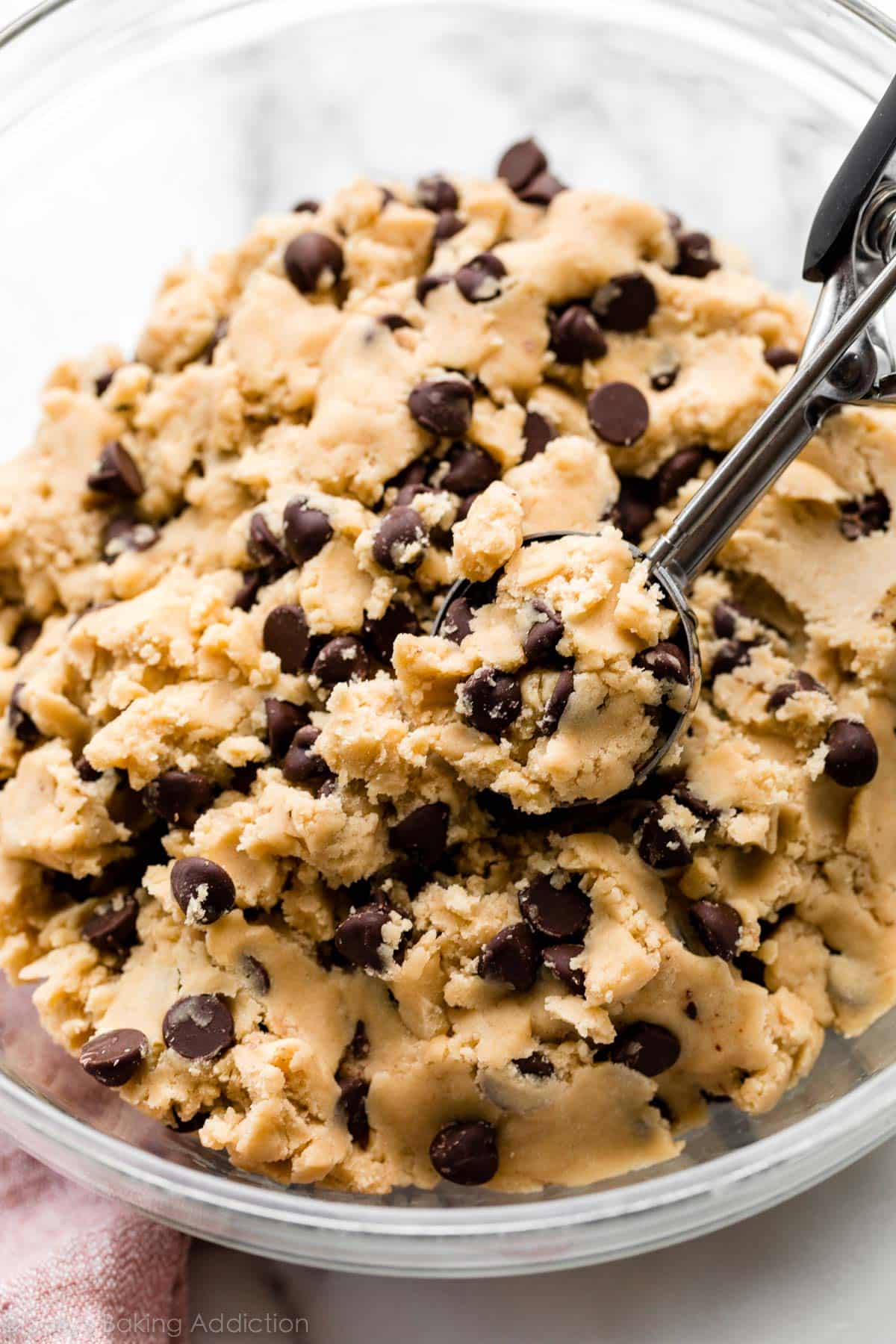
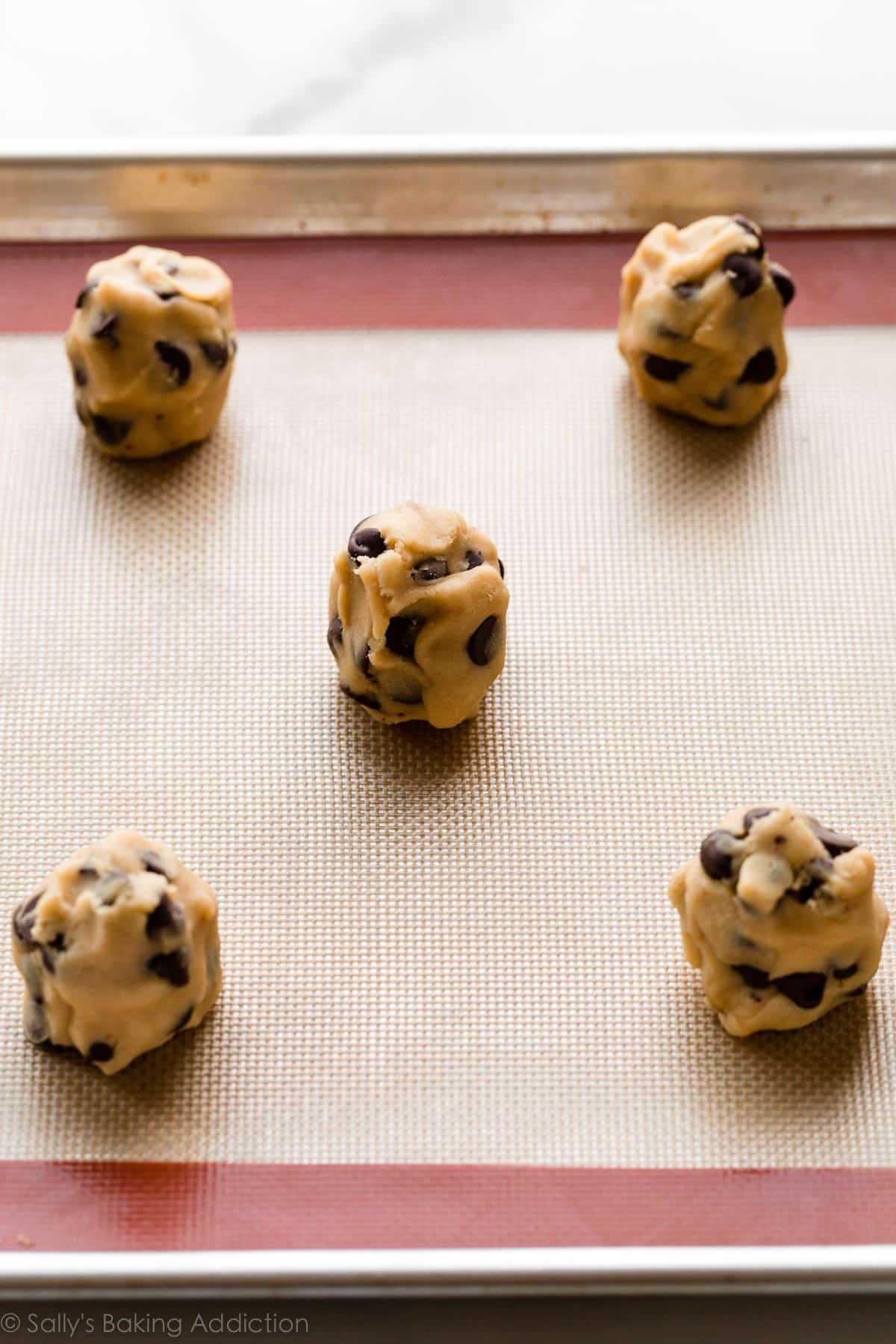
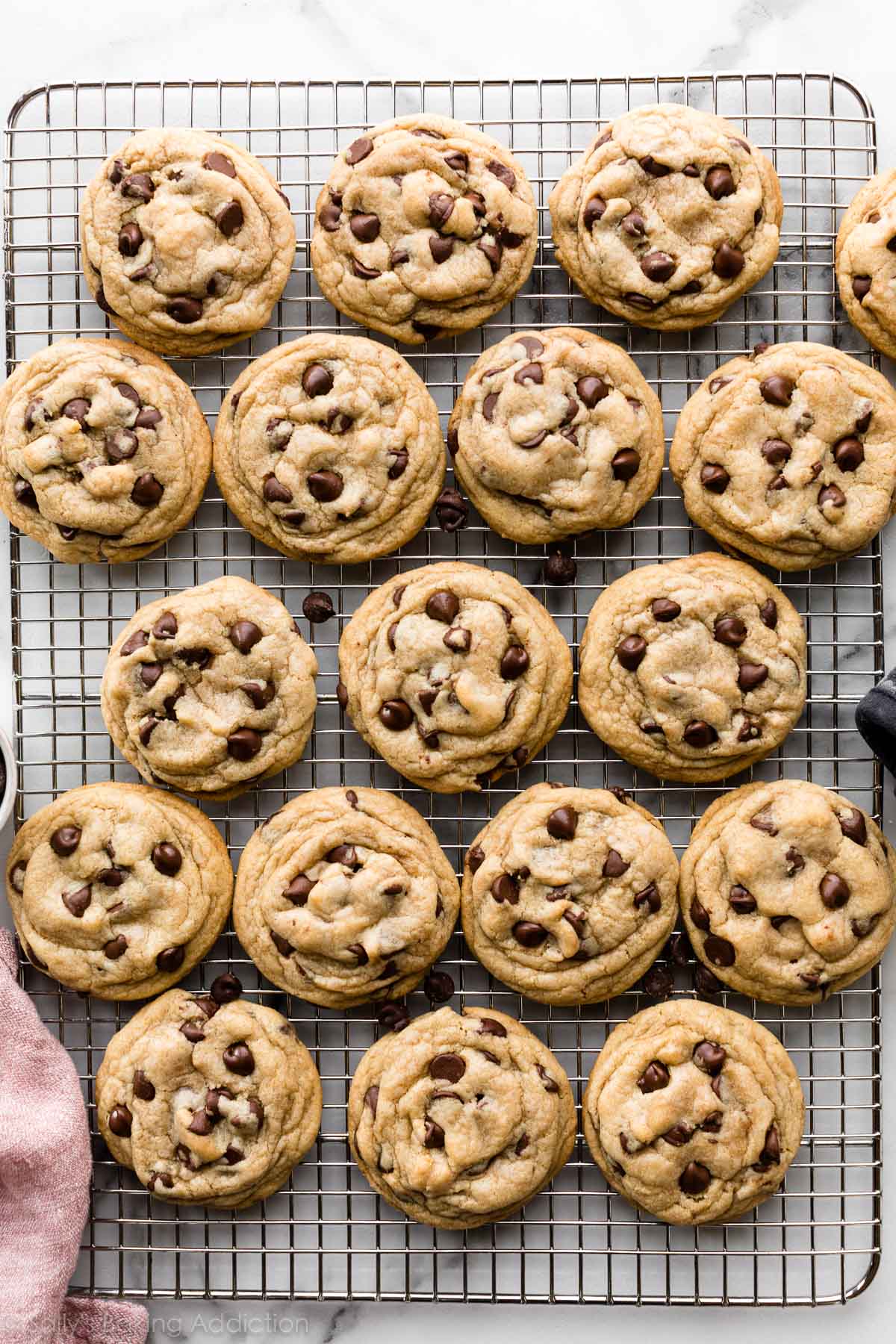
2. Roll the cookie dough balls extra tall. After the dough has chilled, scoop out a ball of dough that’s 3 Tablespoons for XL cookies or about 2 heaping Tablespoons (1.75 ounces or 50g) for medium-large cookies. I usually use this medium cookie scoop and make it a heaping scoop. But making the cookie dough balls tall and textured, rather than wide and smooth, is my tried-and-true trick that results in thick and textured-looking cookies. We’re talking thick bakery-style cookies with wrinkly, textured tops. Your cookie dough should look less like balls and more like, well, lumpy columns, LOL.
Watch the video below to see how I shape them. I also demonstrate how I use a spoon to reshape them during baking if I see they’re spreading too much.
l
Can I scoop and roll the dough before chilling, and chill the dough balls?
Because of the melted butter in this dough, the dough is very soft and a little greasy before chilling, so it’s harder to shape the cookie dough balls. We recommend chilling first, then shaping. If after chilling the dough is very hard and difficult to scoop, let it sit at room temperature for 15 minutes and then try again.
Can I chill the dough in the freezer instead of the refrigerator to speed up the chilling process?
We typically do not recommend jumping right to the freezer without chilling the dough first. A quick freeze like that can cause the dough to chill unevenly and then spread unevenly during the baking process. For best results, we recommend following the recipe as written. If you don’t have time to wait for the dough to chill, try this recipe for 6 giant chocolate chip cookies instead, which doesn’t require dough chilling (see recipe Notes in that post for details on using the dough to make 24 regular-size cookies).
Tools I Recommend for This Recipe
I’ve tested many baking tools and these are the exact products I use, trust, and recommend to readers. You’ll need most of these tools when making sugar cookies and snickerdoodles, too!
Yes, absolutely. After chilling, sometimes I roll the cookie dough into balls and freeze them in a large zipped-top bag. Then I bake them straight from the freezer, keeping them in the oven for an extra minute. This way you can bake just a couple of cookies whenever the craving hits. (The chewy chocolate chip cookie craving is a hard one to ignore.)
If you’re curious about freezing cookie dough, here’s my How to Freeze Cookie Dough page (with video tutorial).
l
Facebook member, Leigh, commented: “These are the only CC cookies I’ve made for years (and this recipe is how I came to be such a fan of SBA!) This recipe worked great when I lived in Denver and had issues with baking at altitude, and it’s still our favorite now that we’re back at sea level. I usually make 4x-6x batches and freeze tons of cookie balls to bake later.“
In Short, Here Are the Secrets to Soft & Chewy Chocolate Chip Cookies:
Cornstarch helps product soft and thick cookies.
Using more brown sugar than white sugar results in a moister, softer cookie.
An extra egg yolk increases chewiness.
Rolling the cookie dough balls to be tall and lumpy instead of wide and smooth gives the cookies a bakery-style textured thickness. It’s a trick we use for cake batter chocolate chip cookies, too.
Using melted butter (and slightly more flour to counteract the liquid) increases chewiness.
Comments
Post a Comment